Artificial intelligence and big data are reshaping digital marketing by providing new insights into consumer behaviour. The technologies allow marketers to create more personalised and effective strategies. As the digital world evolves, businesses must adapt to stay competitive.

Under China’s push to clean up its energy system, AI is starting to shape how power is produced, moved, and used — not in abstract policy terms, but in day-to-day operations.
Advertisement
 Popular News
Cognizant, Tata Consultancy Services, Infosys, and Wipro have announced plans to deploy more than 200,000 Microsoft Copilot licenses in their enterprises – over 50,000 per company – in what Microsoft is calling a new benchmark for enterprise-scale adoption of generative AI.

BNP Paribas is testing how far AI can be pushed into the day-to-day mechanics of investment banking. According to Financial News, the bank has rolled out an internal tool called IB Portal, designed to help bankers assemble client pitches more quickly and with less repetition.

Across the US, workers are experiencing a seismic shift in workplace operations as AI literacy becomes a core part of business strategies. This is redefining roles and expectations, while workloads continue to increase and pressure intensifies.

F. Scott Fitzgerald observed that “in a real dark night of the soul, it is always three o’clock in the morning.” Microsoft’s latest Copilot usage analysis suggests this nocturnal tendency toward existential contemplation persists in the AI age – with religion and philosophy conversations rising through the rankings during early morning hours.

Microsoft believes it has a fix for AI prompts being given, the response missing the mark, and the cycle repeating.

Accenture and Anthropic are setting out to boost enterprise AI integration with a newly-expanded partnership.

For the past year, we’ve been told that artificial intelligence is revolutionising productivity—helping us write emails, generate code, and summarise documents. But what if the reality of how people actually use AI is completely different from what we’ve been led to believe?

Instacart has deployed an embedded checkout experience within ChatGPT through the emerging Agentic Commerce Protocol.

The UK and Germany plan to integrate their science sectors to accelerate the commercialisation of quantum supercomputing technology.

The convergence of mobile and desktop operating systems is a goal that has remained elusive for big tech firms since the early days of the smartphone. Microsoft’s attempt in the form of Windows Mobile was reaching the end of its road by 2010, and despite Apple’s iOS/iPadOS and macOS moving very slowly towards one another for the last few years, Cupertino has not yet reached the fabled goal of the-one-OS-to-rule-them-all.

Thomson Reuters and Imperial College London have established a frontier AI research lab to overcome historic deployment challenges.

Enterprise leaders are entering 2026 with an uncomfortable mix of volatility, optimism, and pressure to move faster on AI and quantum computing, according to a paper published by the IBM Institute for Business Value. Its findings are based on more than 1,000 C-suite executives and 8,500 employees and consumers.
Thrive Holdings’ push to modernise accounting and IT services is entering a new stage, as OpenAI prepares to take an ownership stake in the company and place its own specialists inside Thrive’s businesses. In doing so, OpenAI is testing an AI-driven model that pairs capital, sector expertise, and embedded technical teams.

When JPMorgan Asset Management reported that AI spending accounted for two-thirds of US GDP growth in the first half of 2025, it wasn’t just a statistic – it was a signal.

SAP is moving its sovereignty plans forward with EU AI Cloud, a setup meant to unify its efforts in the region under one approach. The goal is to give organisations in Europe more choice and control of how they run AI and cloud services.

The latest MCP spec update fortifies enterprise infrastructure with tighter security, moving AI agents from pilot to production.
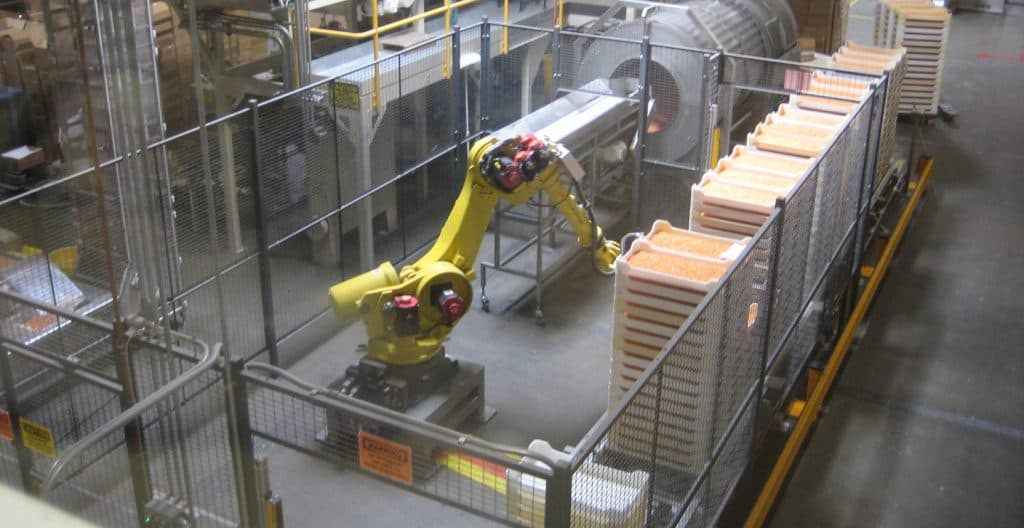
Manufacturers today are working against rising input costs, labour shortages, supply-chain fragility, and pressure to offer more customised products. AI is becoming an important part of a response to those pressures.

AI spending in Asia Pacific continues to rise, yet many companies still struggle to get value from their AI projects. Much of this comes down to the infrastructure that supports AI, as most systems are not built to run inference at the speed or scale real applications need. Industry studies show many projects miss their ROI goals even after heavy investment in GenAI tools because of the issue.

Alibaba’s recently launched Qwen AI app has demonstrated remarkable market traction, accumulating 10 million downloads in the seven days since its public beta release – a velocity that exceeds the early adoption rates of ChatGPT, Sora, and DeepSeek.

The Royal Navy is handing the first line of its recruitment operations to a real-time AI avatar called Atlas.
The content available on this website (including text, graphics, images, and information) is intended for general informational purposes only. Materials, details, terms of use, and descriptions presented on these pages may be changed without prior notice.