For a company built on intellectual property, scale creates a familiar tension. Disney needs to produce and distribute content across many formats and audiences, while keeping tight control over rights, safety, and brand consistency. Generative AI promises speed and flexibility, but unmanaged use risks creating legal, creative, and operational drag.

Artificial intelligence has been part of the insurance sector for years – the Finance function in many businesses is often the first to automate. But what’s remarkable in the instance of AI is how directly the technology is woven into day-to-day operational work. Not sitting in the background as a niche modelling capability, AI is now used in places where insurers spend most of their time and money: claims handling, underwriting, and running complex programmes.
Advertisement
 Popular News
Big Pharma’s AI race extends across drug discovery, development, and clinical trials—but AstraZeneca has distinguished itself by deploying AI clinical trials technology at an unprecedented public health scale.

AI search engines and generative AI tools are certainly transforming how people discover information online. Far from making SEO specialists obsolete, the shift highlights clearly why skilled human optimisers remain more important than ever.

Mining conglomerate BHP describes AI as the way it’s turning operational data into better day-to-day decisions. A blog post from the company highlights the analysis of data from sensors and monitoring systems to spot patterns and flag issues for plant machinery, giving choices to decision-makers that can improve efficiency and safety – plus reduce environmental impact.

JPMorgan Chase’s AI strategy is delivering measurable returns – but at a human cost. The bank isn’t hiding the fact. With 200,000 employees now using its proprietary LLM Suite platform daily and AI benefits growing 30-40% annually, America’s largest bank is executing what Chief Analytics Officer Derek Waldron calls a plan to create the world’s first “fully AI-connected enterprise.”

As the company that kick-started the cloud computing revolution, Amazon is one of the world’s biggest companies whose practices in all things technological can be regarded as a blueprint for implementing new technology.

Enterprise leaders are pressing ahead with artificial intelligence, even as some early results remain uneven. Reporting from the Wall Street Journal and Reuters shows that most CEOs expect AI spending to keep rising through 2026, despite difficulty tying those investments to clear, enterprise-wide returns.
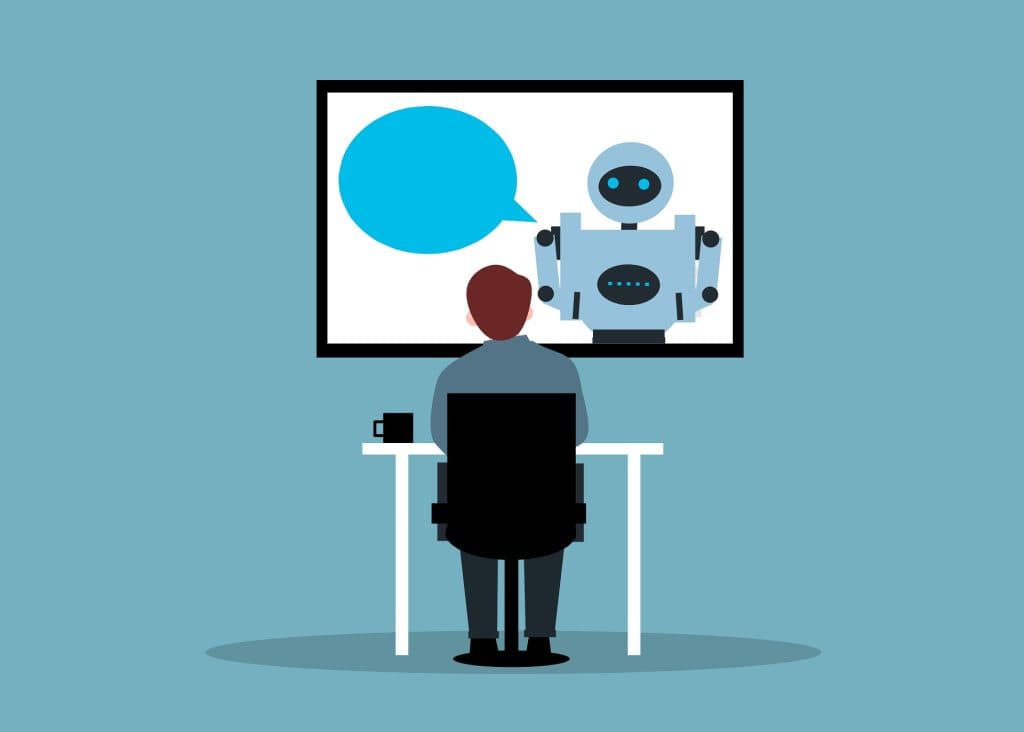
New adoption data from Perplexity reveals how AI agents are driving workflow efficiency gains by taking over complex enterprise tasks.

Adoption of generative AI has outpaced workforce capability, prompting OpenAI to target the skills gap with new certification standards.

Digital payments and fintech company Ant International, has won the NeurIPS Competition of Fairness in AI Face Detection. The company says it’s committed to developing secure and inclusive financial services, particularly as deepfake technologies are becoming more common.

InTouchNow.ai is now offering doctors surgeries a piece of software designed to modernise phone answering, designed to reduce hold times and create a smoother, more responsive experience for patients and staff. In the UK, many GP (general practice) surgeries’ phone lines are tied up in the mornings as patients try to contact their medical practitioner for appointments. More acute need can be delayed among calls with routine enquiries, meaning high-priority callers can be left waiting for long periods.

According to AWS at this week’s re:Invent 2025, the chatbot hype cycle is effectively dead, with frontier AI agents taking their place.

Amazon Web Services has scored another major win for its custom AWS Trainium accelerators after striking a deal with AI video startup Decart. The partnership will see Decart optimise its flagship Lucy model on AWS Trainium3 to support real-time video generation, and highlight the growing popularity of AI accelerators over Nvidia’s graphics processing units.

In the basement of a Boise, Idaho, dental office in 1978, four engineers founded what would become one of America’s semiconductor giants. Ward Parkinson, Joe Parkinson, Dennis Wilson, and Doug Pitman started Micron Technology as a modest design consultancy, backed by local investors including potato magnate J.R. Simplot.
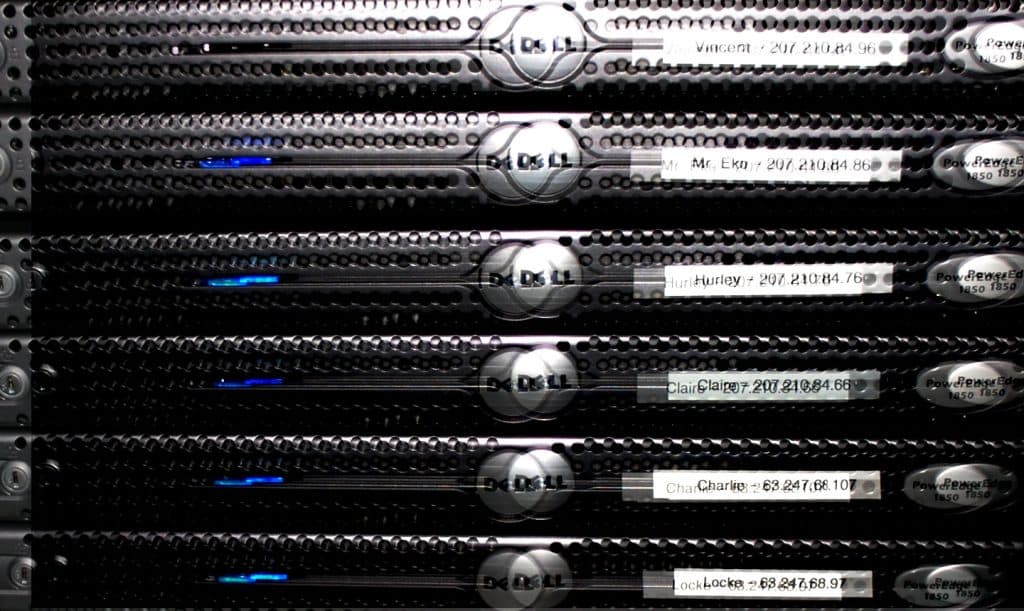
The cybersecurity training provider Hack The Box (HTB) has launched the HTB AI Range, designed to let organisations test autonomous AI security agents under realistic conditions, albeit with oversight from human cybersecurity professionals. Its goal is to help users assess how well AI, and mixed human–AI teams might defend infrastructure.

For years, cybersecurity experts debated when – not if – artificial intelligence would cross the threshold from advisor to autonomous attacker. That theoretical milestone has arrived.
While tech giants pour billions into computational power to train frontier AI models, China’s DeepSeek has achieved comparable results by working smarter, not harder. The DeepSeek V3.2 AI model matches OpenAI’s GPT-5 in reasoning benchmarks despite using ‘fewer total training FLOPs’ – a breakthrough that could reshape how the industry thinks about building advanced artificial intelligence.

If you asked most enterprise leaders which AI tools are delivering ROI, many would point to front-end chatbots or customer support automation. That’s the wrong door. The most value-generating AI systems today aren’t loud, customer-facing marvels. They’re tucked away in backend operations. They work silently, flagging irregularities in real-time, automating risk reviews, mapping data lineage, or helping compliance teams detect anomalies before regulators do. The tools don’t ask for credit, but are saving millions.

The next frontier for edge AI medical devices isn’t wearables or bedside monitors—it’s inside the human body itself. Cochlear’s newly launched Nucleus Nexa System represents the first cochlear implant capable of running machine learning algorithms while managing extreme power constraints, storing personalised data on-device, and receiving over-the-air firmware updates to improve its AI models over time.

Indonesia’s push into AI-led growth is gaining momentum as more local organisations look for ways to build their own applications, update their systems, and strengthen data oversight. The country now has broader access to cloud and AI tools after Microsoft expanded the services available in the Indonesia Central cloud region, which first went live six months ago. The expansion gives businesses, public bodies, and developers more options to run AI workloads inside the country instead of overseas data centres.

The ability to execute adversarial learning for real-time AI security offers a decisive advantage over static defence mechanisms.
The content available on this website (including text, graphics, images, and information) is intended for general informational purposes only. Materials, details, terms of use, and descriptions presented on these pages may be changed without prior notice.