Advertisement
A recent industry report [PDF] argues that Britain’s railway network could carry an extra billion journeys by the mid-2030s, building on the 1.6 billion passenger rail journeys recorded to year-end March 2024. The next decade will involve a combination of complexity and control, as more digital systems, data, and interconnected suppliers create the potential for more points of failure.
The report’s central theme is that AI will become the operating system for modern rail, not as a single, centralised collection of models and algorithms, but as layers of prediction, optimisation, and automated monitoring found in infrastructure, rolling stock, maintenance yards, and stations (pp.18-23). This technology will guide human focus within daily work schedules rather than replace human activity entirely.
Traditional rail maintenance relies on fixed schedules and manual inspections, a reactive and labour-intensive practice. The whitepaper cites Network Rail’s reliance on engineers walking the track to spot defects (p.18). AI will shift the industry to predictive maintenance, analysing data from sensors to forecast failures before they cause significant disruption.
This involves a combination of sensors and imaging, including high-definition cameras, LiDAR scanners, and vibration monitors. These provide machine-learning systems with data that can flag degradation in track, signalling, and electrical assets ahead of failure (pp.18-19).
These monitoring programs can generate alerts months in advance, reducing emergency call-outs. The timeframe for predicting asset failure varies by asset type. Network Rail’s intelligent infrastructure efforts should transition from “find and fix” to “predict and prevent.”
Network Rail emphasises data-led maintenance and tools designed to consolidate asset information, while European R&D programs (like Europe’s Rail and its predecessor, Shift2Rail) fund projects like DAYDREAMS, similarly aimed at prescriptive asset management. Prediction at scale requires a common approach to achieve transformation.
Operational optimisation, beyond predictive maintenance, offers significant returns. AI systems use live and historical operating data—train positions, speeds, weather forecasts—to anticipate disruption and adjust traffic flow. Digital twin and AI-based traffic management trials in Europe, alongside research and testing of AI-assisted driving and positioning, could increase overall network capacity without laying more track (p.20).
Algorithms also advise drivers on optimal acceleration and braking, potentially saving 10-15% in energy. Considering route variations, traction, and timetable constraints, energy savings compound quickly across a large network.
Visible AI applications focus on safety and security. Obstacle detection uses thermal cameras and machine learning to identify hazards beyond human visibility. AI also monitors level crossings and analyses CCTV footage to spot unattended items and suspicious activity (pp.20-21). For example, AI and LiDAR are used for crowd monitoring at London Waterloo as part of a suite of safety tools.
AI can forecast demand using ticket sales, events, and mobile signals, allowing operators to adjust the number of carriages and reduce overcrowding, the report states. Passenger counting is a high-impact, low-drama application: better data supports better timetables and clearer customer information.
As operational technology converges with IT, cybersecurity becomes a critical operational issue. Legacy systems, lacking replacement plans, pose a risk, as does integrating modern analytics with older infrastructure. This creates conditions attractive to attackers.
The future of AI in rail involves sensors performing in extreme environments, models trusted and tested by operators, and governance that treats cyber resilience as inseparable from physical safety. The report’s message is that AI will arrive regardless. The question is whether railways proactively adopt and control it or inherit it as un-managed complexity.
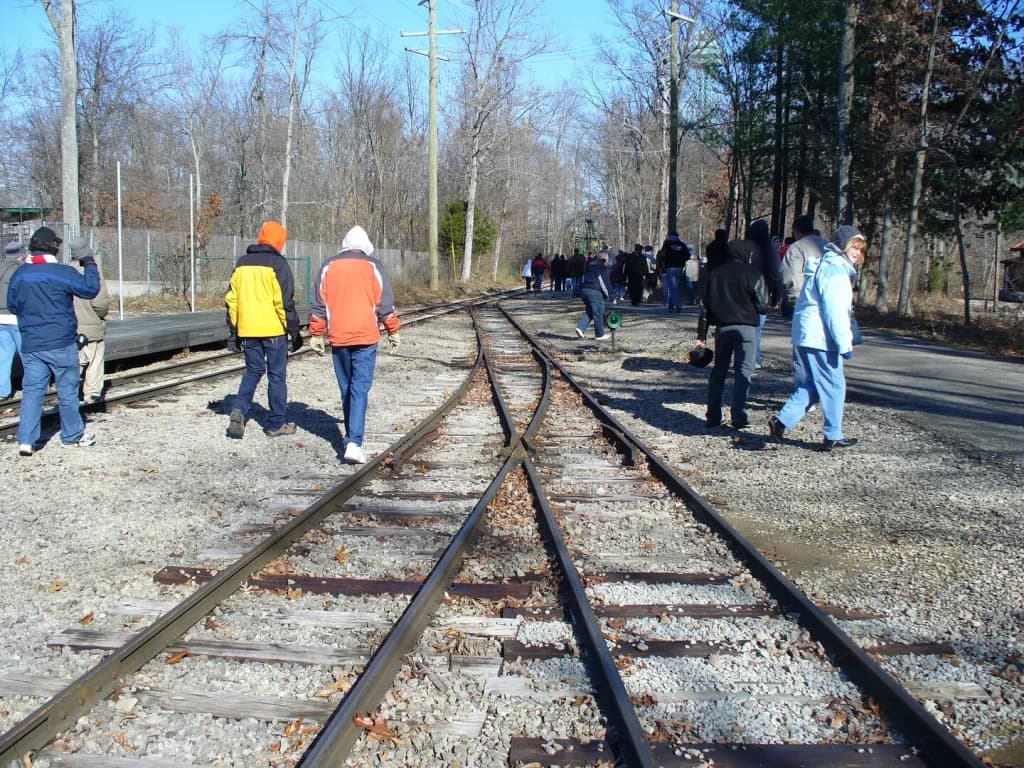
(Image source: “Train Junction” by jcgoble3 is licensed under CC BY-SA 2.0.)

Want to learn more about AI and big data from industry leaders? Check out AI & Big Data Expo taking place in Amsterdam, California, and London. The comprehensive event is part of TechEx and co-located with other leading technology events. Click here for more information.
AI News is powered by TechForge Media. Explore other upcoming enterprise technology events and webinars here.

Microsoft believes it has a fix for AI prompts being given, the response missing the mark, and the cycle repeating.
Advertisement

New adoption data from Perplexity reveals how AI agents are driving workflow efficiency gains by taking over complex enterprise tasks.

Many companies are still working out how to use AI in a steady and practical way, but a small group is already pulling ahead. New research from NTT DATA outlines a playbook that shows how these “AI leaders” set themselves apart through strong plans, firm decisions, and a disciplined approach to building and using AI across their organisations.

Accenture and Anthropic are setting out to boost enterprise AI integration with a newly-expanded partnership.

Adoption of generative AI has outpaced workforce capability, prompting OpenAI to target the skills gap with new certification standards.
The content available on this website (including text, graphics, images, and information) is intended for general informational purposes only. Materials, details, terms of use, and descriptions presented on these pages may be changed without prior notice.

 Popular News